
Guide
How humane bat exclusion works
Exclusion is not a fogger or a trap. North Carolina Wildlife Specialists uses one-way hardware and permanent custom seals so bats leave on their own schedule—then cannot return through the gaps that invited them.
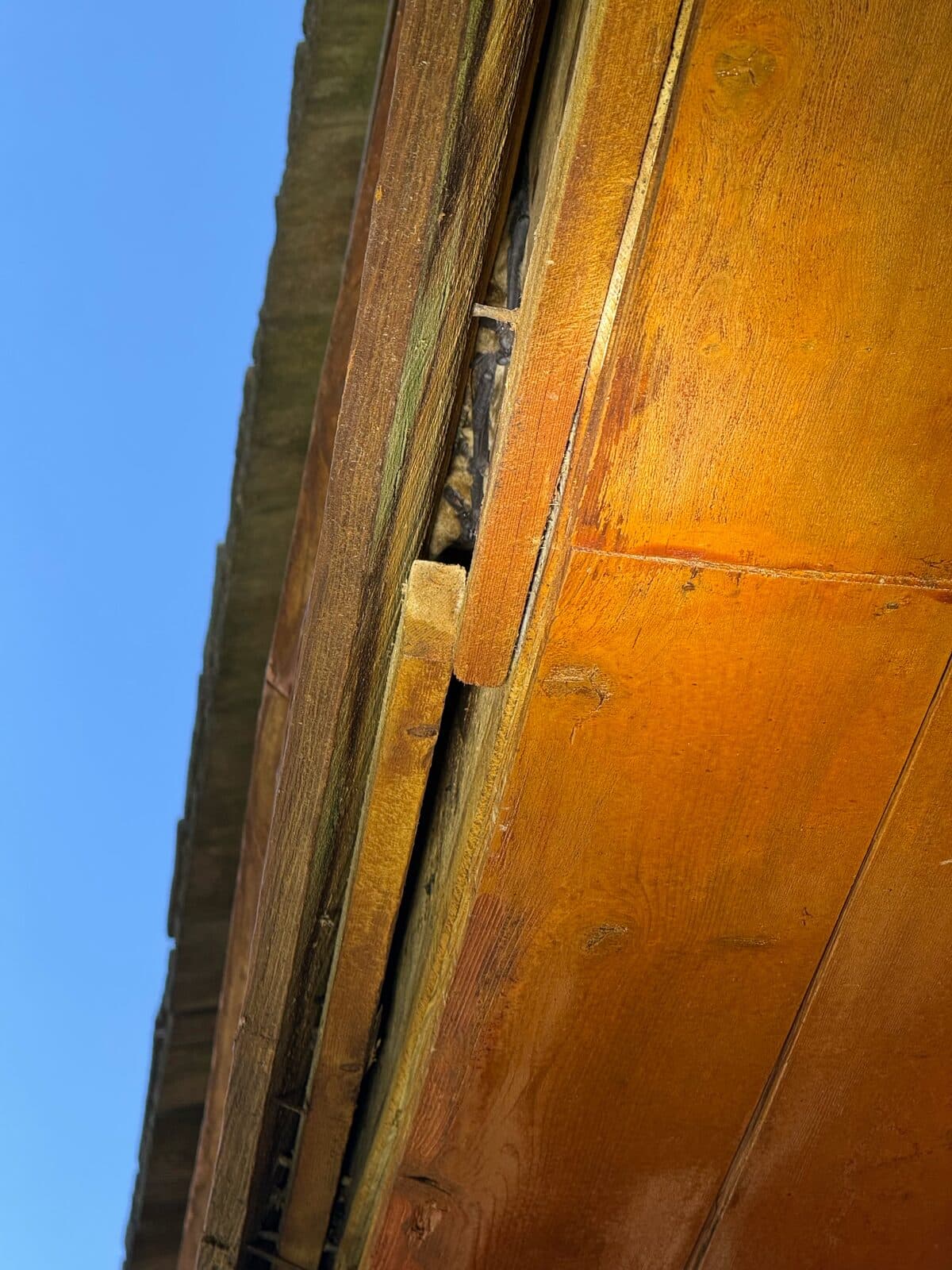
- Full-envelope mapping first
- One-way devices sized to each opening
- Monitor until fly-outs stop
- Custom inserts — not spray foam
- Photo documentation
- Written warranty on sealed openings
1. Inspect and map every entry
We combine attic interior checks with a full exterior walk of ridges, soffits, chimneys, brick weeps, and flashing. Carolina colonies often use multiple coin-sized exits.
2. Install one-way devices
Tubes, valves, or nets let bats exit at dusk but block re-entry. Devices stay until activity stops—rushing this step is how DIY fails.
3. Permanently seal with custom inserts
We remove devices and close mapped openings with custom inserts and clear products—never spray foam as the lasting seal. Finishes are meant to be nearly invisible on brick, vinyl, wood, and metal.
4. Warranty the sealed work
Whole-structure jobs include a two-year written warranty. A lifetime warranty is available upon request.
FAQ
- Often several days to a couple of weeks depending on colony size and weather. We explain the window before work starts.
Services