North Carolina bat species homeowners and facilities managers encounter
North Carolina supports bats from the Blue Ridge to the Outer Banks approaches. Only a handful of species account for most attic, soffit, fascia, and chimney calls across the Triangle, Charlotte, the Triad, Asheville, and the Wilmington corridor—especially big brown and little brown bats. Others primarily roost in foliage or trees and are less often found indoors; we still cover key species so outdoor foraging is not mistaken for a building colony. North Carolina Wildlife Specialists uses humane one-way exclusion consistent with North Carolina Wildlife Resources Commission (NCWRC) expectations—never attic poisons.
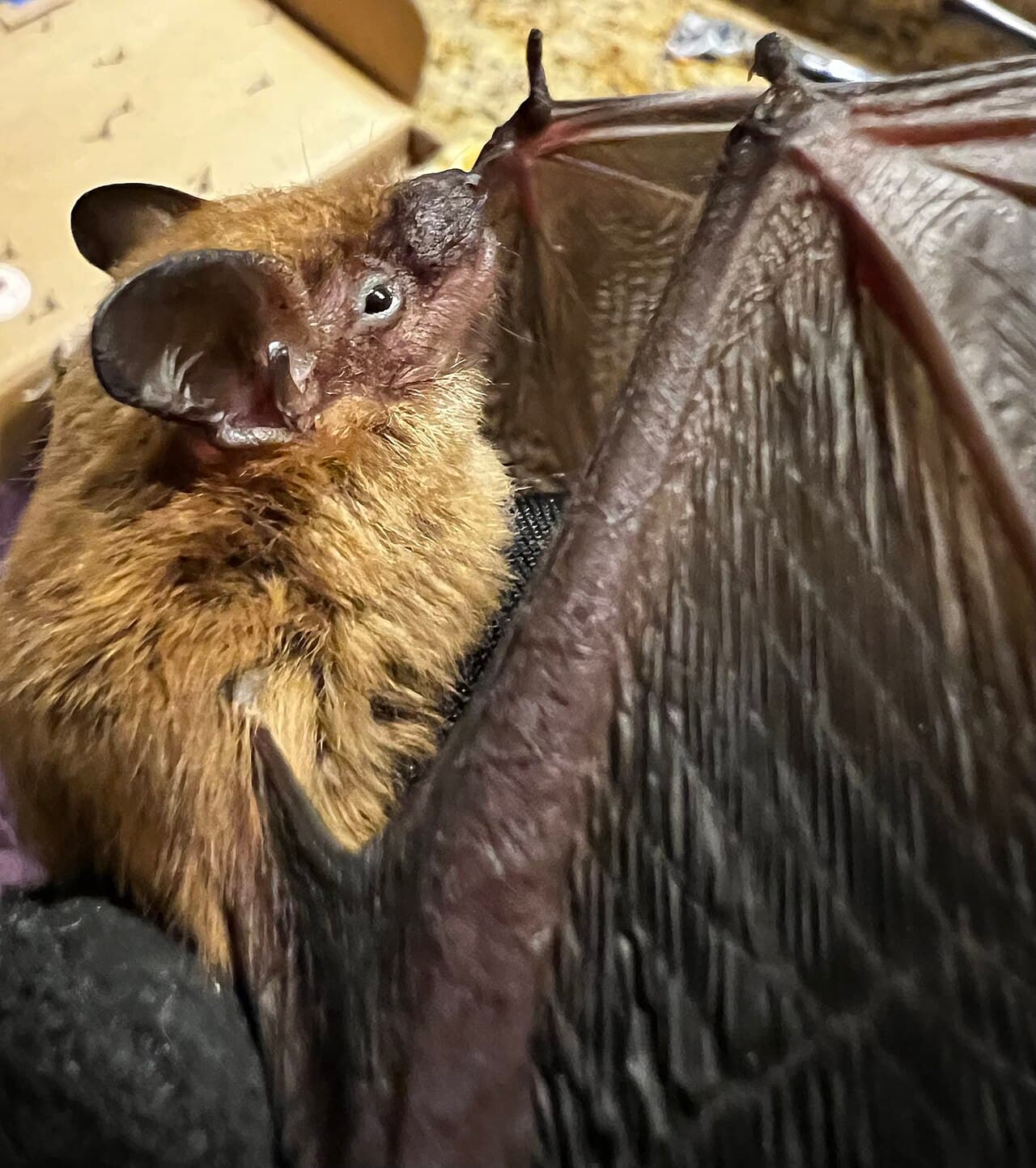
Big brown bat
Eptesicus fuscusVery common in NC buildingsRelatively large bat with glossy brown fur and a broad nose. Widespread across North Carolina urban, suburban, and rural areas from the mountains to the coastal plain.
Roosts: Buildings, bridges, rock crevices, and tree cavities. Maternity colonies frequently use attics and wall voids; individuals may night-roost on porches.
Homes: Big brown bats commonly use older wood attics, chimney areas, and soffit returns in Piedmont brick homes and Triangle craftsman houses. Scratching at dusk, guano below ridge lines, and occasional living-space fly-ins are typical calls.
Commercial: Schools, churches, and older commercial attics host maternity groups. Shared envelopes need careful mapping so exclusion does not push bats into occupied rooms.
Photo: Wildlife Specialists field reference library
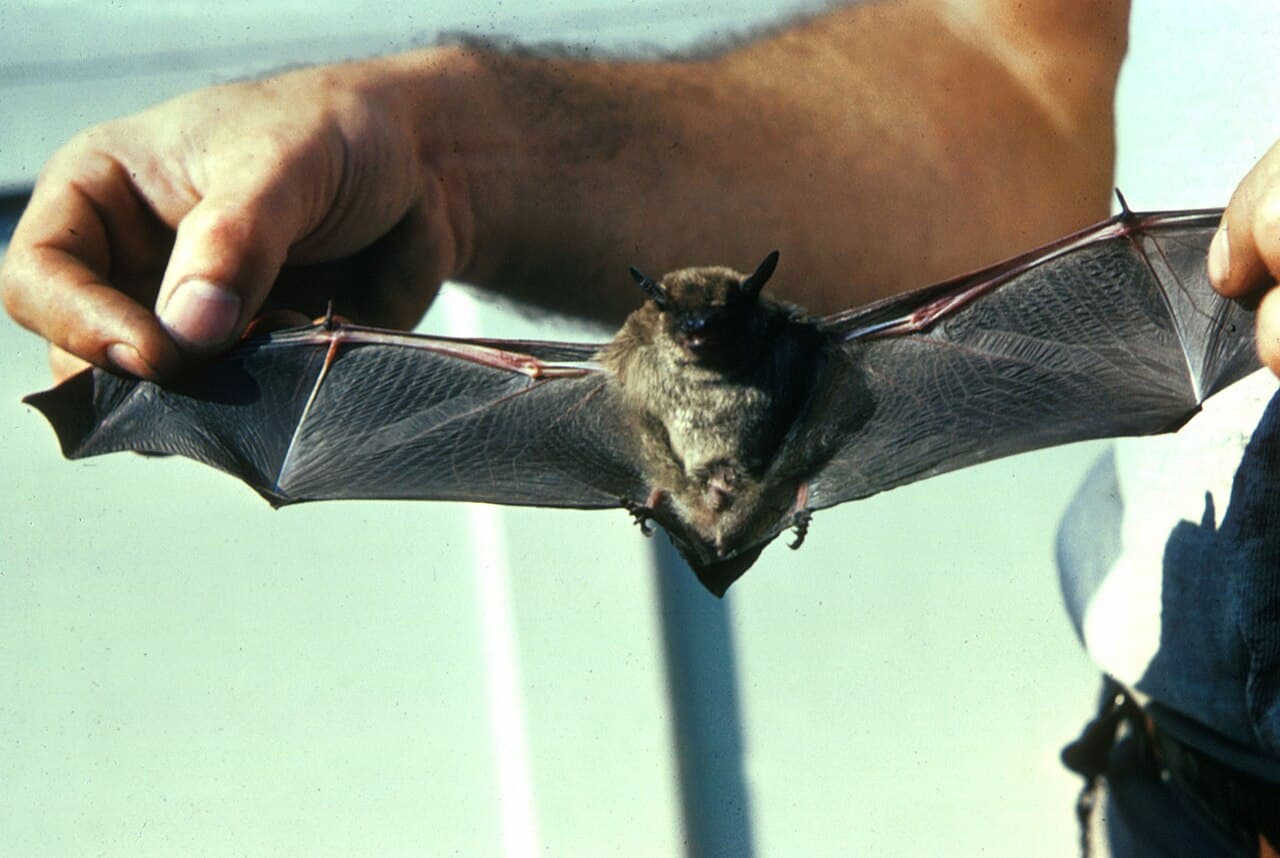
Little brown bat
Myotis lucifugusCommon in buildings where presentSmall myotis with glossy brown fur. Historically widespread; populations face serious regional pressure—another reason humane, lawful exclusion matters.
Roosts: Attics, wall voids, bat houses, tree cavities, and occasionally bridges. Maternity colonies favor warm building roosts near water and insect forage.
Homes: Homeowners notice small synchronized dusk emergences, guano under ridge and soffit lines, and ammonia odor after hot Carolina days.
Commercial: Campuses, warehouses, and multifamily roofs can hold colonies that need full-envelope mapping before one-way devices.
Photo: Wildlife Specialists field reference library
Eastern red bat
Lasiurus borealisMostly foliage; occasional building contactStriking reddish to brick-orange fur; roosts primarily in tree foliage. Common across North Carolina woodlands and suburban canopies.
Roosts: Leaf clusters and tree foliage; rarely deep attic colonies. Often seen foraging at dusk around streetlights and yards.
Homes: Usually not an attic-colony species. Homeowners may see individuals near porch lights or find a solitary bat on siding after storms—still do not handle.
Commercial: Rarely a commercial envelope issue; outdoor foraging near campuses is normal and beneficial.
Photo: Wildlife Specialists field reference library
Evening bat
Nycticeius humeralisCommon in buildings and tree cavitiesMedium-small dark bat common across the Piedmont and coastal plain; often overlooked next to big brown bats.
Roosts: Buildings, tree cavities, and under bark. Maternity groups use attics and shutters in warmer months.
Homes: Guano under eaves, dusk exits from fascia gaps, and small colonies in shutters or soffits are classic evening-bat signs on Carolina homes.
Commercial: Low-rise commercial and multifamily eaves can host groups that need mapped one-way exclusion rather than spot foam.
Photo: Wildlife Specialists field reference library
Tri-colored bat
Perimyotis subflavusOccasional in structures and crevicesSmall bat with distinctive tri-colored hairs; faces conservation concern in parts of its range.
Roosts: Tree foliage, caves, mines, and occasionally buildings or shutters. Sensitive to disturbance.
Homes: Less often a large attic colony than big brown bats, but individuals and small groups may use shutters and tight voids.
Commercial: Historic and masonry buildings with crevices may host individuals—map carefully and use humane methods only.
Photo: Wildlife Specialists field reference library
Brazilian (Mexican) free-tailed bat
Tadarida brasiliensisOccasional / regional in NC buildingsMedium bat with long narrow wings and a tail extending beyond the membrane. More common farther south and west; appears in parts of the Carolinas associated with bridges and buildings.
Roosts: Bridges, buildings, and large colony sites where present. Strong site fidelity to warm roosts.
Homes: Where present, large dusk emergences and guano under ridge lines mirror other free-tailed regions—full envelope mapping still required.
Commercial: Warehouses and bridges near commercial campuses can host colonies needing phased exclusion and documentation.
Photo: Wildlife Specialists field reference library